

Aurelia in 2025
Space infrastructure for the public good
It’s been a remarkable year for the Aurelia team, and for the space ecosystem globally. Successful test launches of both SpaceX’s Starship and Blue Origin’s New Glenn-2 mission have initiated the next phase of humanity’s ambitions in space: reusable, heavy-lift rockets that dramatically lower the costs of launching payloads into orbit. With super-heavy rockets and $200/kilogram payloads in sight, it’s time to start building the infrastructure that will support the massive scale of space activity these capabilities unlock for us. As I said in my TED Talk this spring, the bottleneck isn’t rockets anymore; it’s real estate.
This year also marked 50 years since the iconic 1975 NASA Summer Study, a summit of visionary scientists and engineers who envisioned what humanity’s future in space would look like. The focus was on orbiting spaceships, and the result was a document called "Space settlements: A design study." Aurelia Institute and Homeworld Collective celebrated the 50th anniversary of the NASA Summer Study by gathering distinguished guests and thought partners for an exclusive evening centered around long-term agenda-setting for "Space Infrastructure for the Public Good.” The evening included a fireside chat between myself and Jed McCaleb, founder and chairman of Vast Space, exploring the challenges and possibilities around artificial gravity space stations.
This year more than ever, Aurelia has been focused on creating the infrastructure of our shared space future: the structures, systems, and collaborations that will make possible a whole ecosystem of space stations and lunar habitats, industrial facilities, and research hubs. Through our continued space architecture R&D, our education and outreach efforts, our new spinout company Rendezvous Robotics, and our new global design competition for Space Urbanism, Aurelia is working to build the connections, the technology, and the economy to empower and expand the emerging space domain.
Read on for more details on all this and more from a truly spectacular year at Aurelia.
Wishing you a peaceful holiday season, and looking forward to working with our amazing community—all of you—on more new and exciting initiatives in 2026.
Ariel Ekblaw, CEO
Highlights
This month we launched the inaugural Aurelia Prize for Design in Space Urbanism: a global competition inviting submissions of sophisticated design concepts to build out the next few layers of civilizational infrastructure in space. Taking its inspiration from the 1975 NASA Summer Study, the goal of this prize is to inspire bold and creative thinking around space habitats and expanding humanity’s horizons.
That same vision frames Ariel Ekblaw’s mainstage TED Talk, “How to Build in Space for Life on Earth.” Aurelia Institute is leading a paradigm shift in space architecture to unlock new ways to build scalable, self-assembling, modular architecture in orbit — scaling up space infrastructure to benefit humanity and planet Earth. The talk was named among the 10 Essential TED Talks of 2025!

Photography by Jasmina Tomic
Launchpad
Aurelia’s first incubated company, spun up in 2024, exited stealth with $3.7M to build reconfigurable space infrastructure. Based in Golden, Colorado and helmed by co-founders Phil Frank (CEO), Joe Landon (President) and Ariel Ekblaw (inventor and board chair), Rendezvous Robotics launched to commercialize and scale up the TESSERAE self-assembling technology. Read more about the company in this exclusive with TechCrunch, and learn about their first major partnership with Starcloud to explore building orbital data centers in this Ars Technica feature.
Aurelia Institute’s sister endeavor is a deep tech VC fund and incubator program empowering and supporting founders at the nexus of space, AI, and climate. The Foundry has invested in 18 early stage space startups so far — including Rendezvous Robotics and leading the $7 million seed financing round for LambdaVision. The Foundry team celebrated a successful first two years when they hosted investors and portfolio company CEOs in Cambridge for their annual general meeting.
Earlier this year we were thrilled to witness the amazing milestone of landing a payload on the lunar surface! In March, the autonomous mini-robots system developed at MIT known as AstroAnt launched to the moon onboard the Intuitive Machines IM-2 mission. Aurelia is currently working on a new spinout effort to focus on further developing the AstroAnt technology for diagnostic sensing, repair tasks, and other unique terrestrial commercialization applications.
Space Architecture R&D
Orbital Biolab
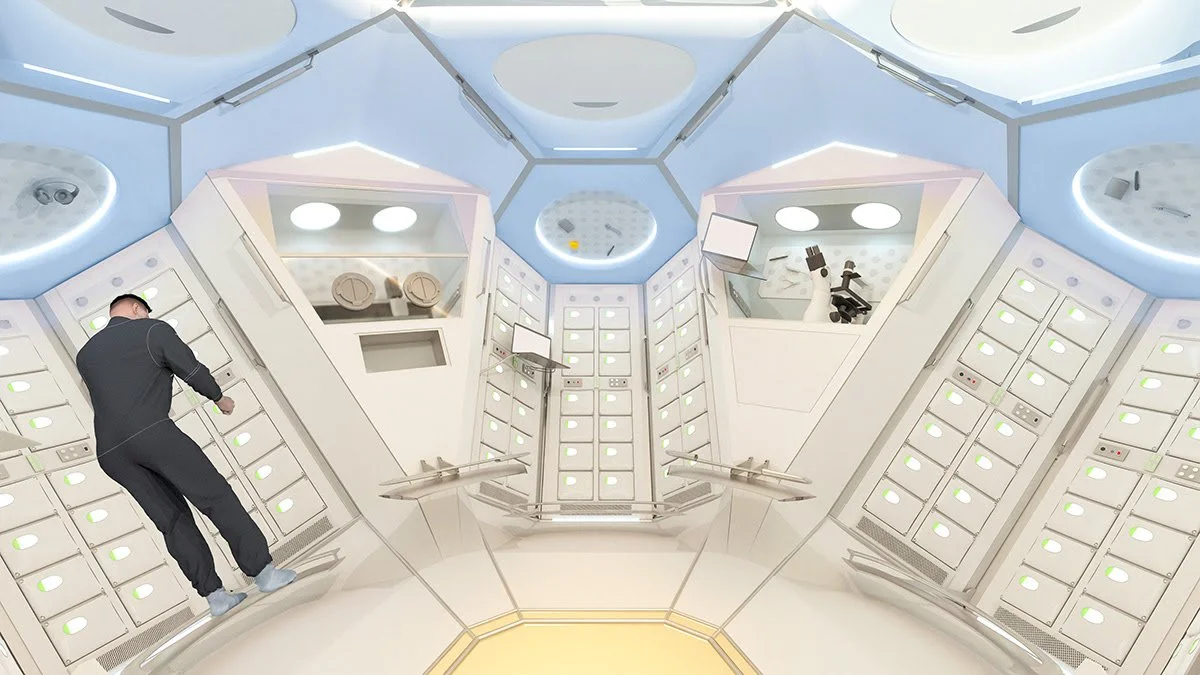
Aurelia Institute’s Orbital Biolab project is our flagship proposal to scale up microgravity science capacity by using the TESSERAE habitat as a biotech lab and manufacturing facility. The microgravity of low Earth orbit provides a unique environment to unlock biomedical breakthroughs that are not possible on Earth.
The Aurelia team has built on the preliminary design analysis of last year’s Orbital Case Study, alongside user and stakeholder interviews, to outfit TESSERAE’s interior with the material, equipment, and infrastructure needed to support a cluster of high-capacity, regulation-compliant, both crew-tended and automated lab spaces. Currently at the conceptual design stage, this project is being presented to select stakeholders to validate research insights, refine design interventions, and raise seed capital. We’re thrilled to announce that we have confirmed our first 7-figure donation for the key scoping phase of this project, completed an extensive internal architecture review, and launched a new partnership with the New York Academy of Sciences to host a world-renowned scientific steering committee to inform and govern operations in orbit.
TESSERAE Gen-5
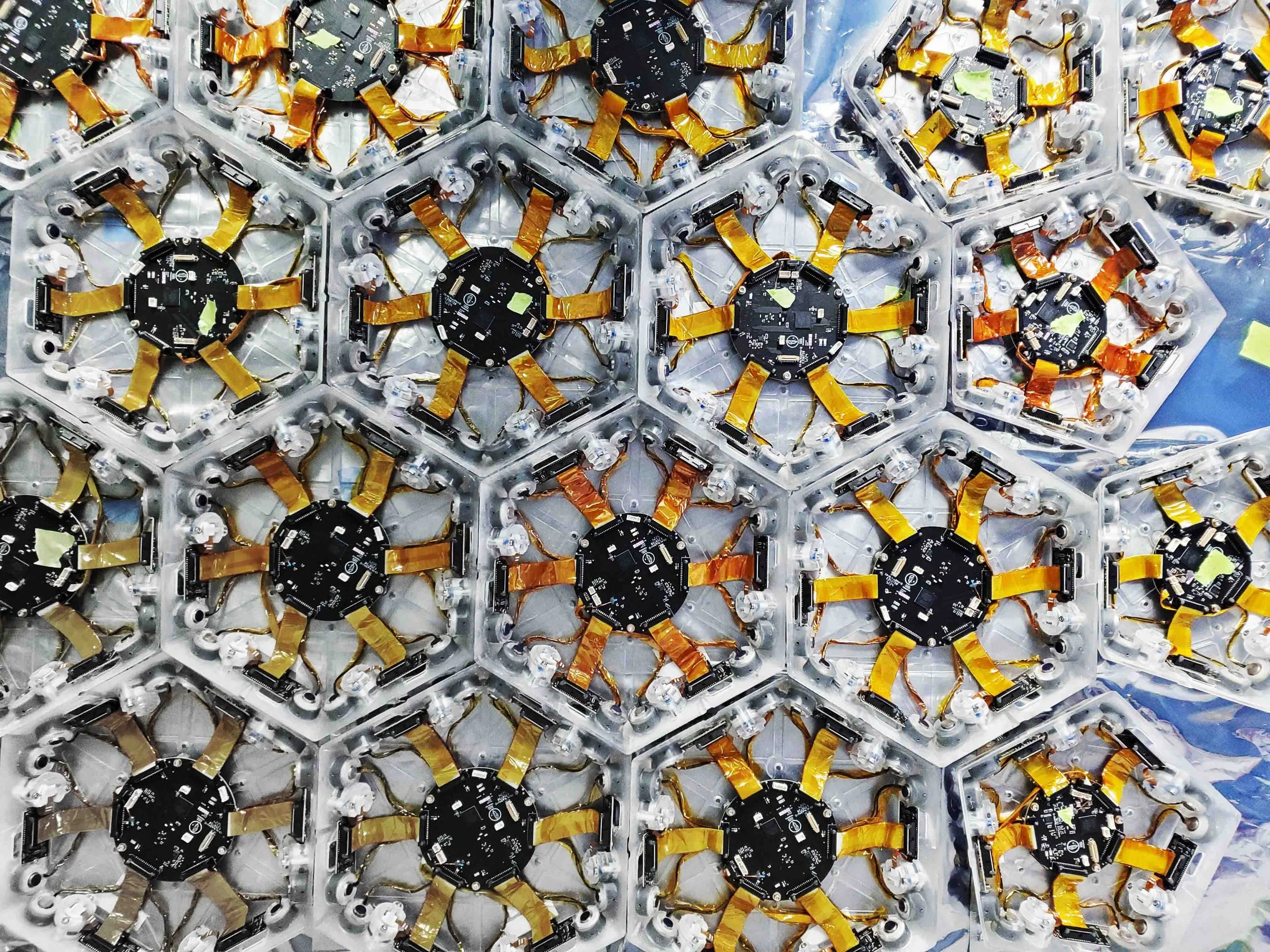
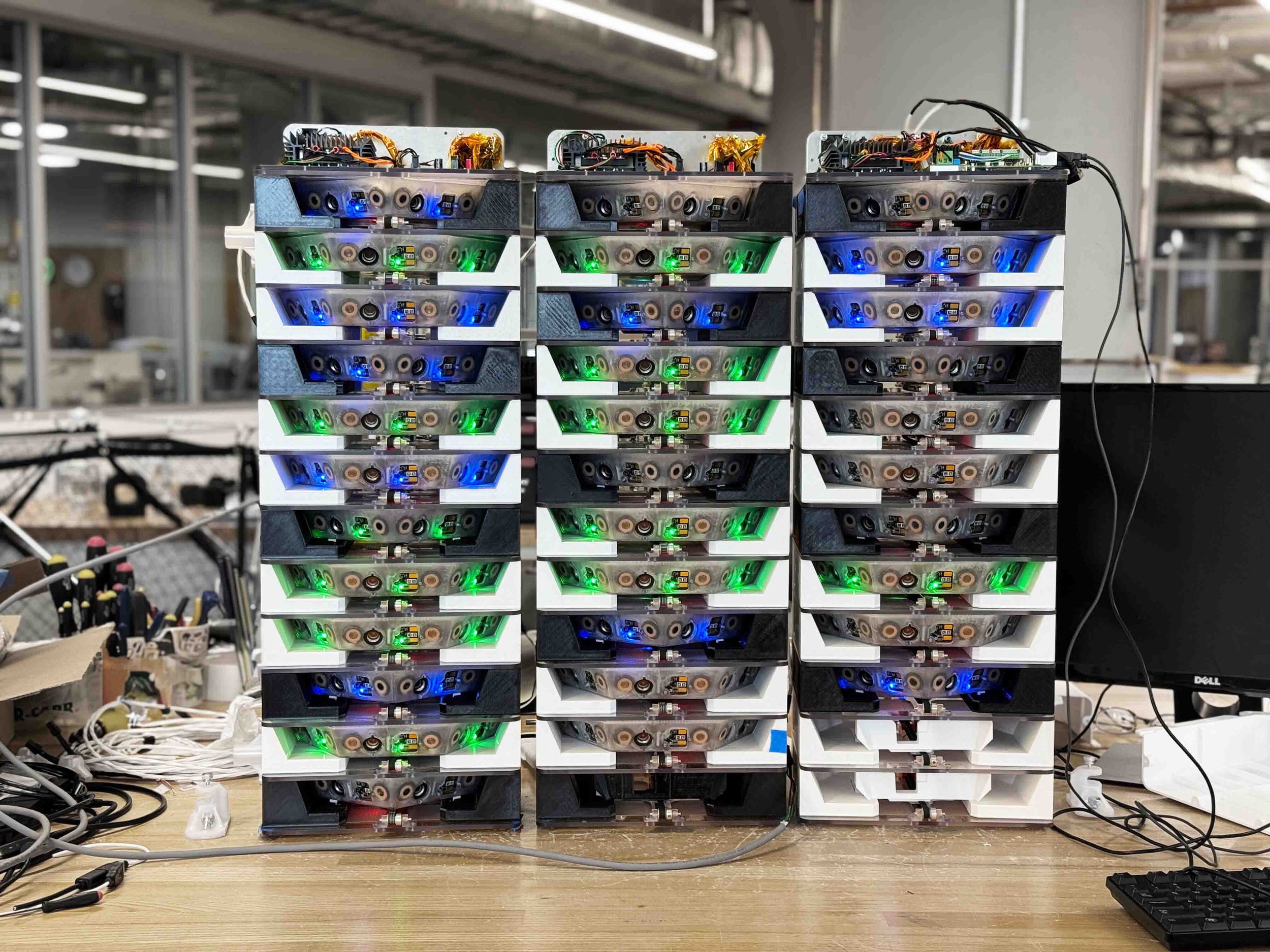
In 2026, a full complement of 32 TESSERAE Gen-5 tiles, the largest and most sophisticated iteration to date, is heading to the ISS to demonstrate autonomous assembly of a 32-tile TESSERAE buckyball structure. The new tiles have just passed JSL and Phase III safety review for NASA in Houston!
The Aurelia team has spent the year working in partnership with Rendezvous Robotics, who are managing the upcoming mission through Axiom Space via a grant from the ISS National Lab, to fabricate the tiles and integrate hardware and software upgrades to the TESSERAE platform.
Space Garden
Space Garden is a concept for an orbiting, autonomous greenhouse that will support cutting-edge agricultural research in microgravity and global engagement in the future of our Earth-Space ecosystem. The mockup structure is composed of a central chamber and 30 growth pods that envision individually controlled climates, designed for a variety of fruiting and flowering plants, trees, fungi, and algae.
Aurelia Institute and Heatherwick studio, in collaboration with fabrication studio Millimetre and engineering firm Format, unveiled the Space Garden model at the 2025 Biennale Architettura in Venice, which ran from May to November and welcomed more than 298,000 visitors. The project’s autonomous and plant-life-support aspects were documented in a technical paper presented at the 2025 International Conference on Environmental Systems in Prague and covered in Wired.
Aurelia is partnering with Daikin Industries, a leader in energy-efficient HVAC technologies, to advance the project’s technology roadmap and explore groundbreaking approaches to air quality and water management — both on Earth and in orbit.

Space Garden is now being rebuilt in its new home at Heatherwick Studio in London. Photography by Nils Koenning
Education & Outreach
Horizon 2025
In May, Aurelia Academy chartered its fourth Horizon zero gravity flight, taking a new cohort of fliers on a parabolic flight following their successful completion of our Microgravity Project Design course. The 2025 Horizon cohort included participants from fellowships, nonprofits, and startups conducting wide-ranging experiments across robotics, biotechnology, space medicine, and more—all unified by Aurelia's mission of making space research accessible to a new generation of professionals.
Aurelia Internship Program
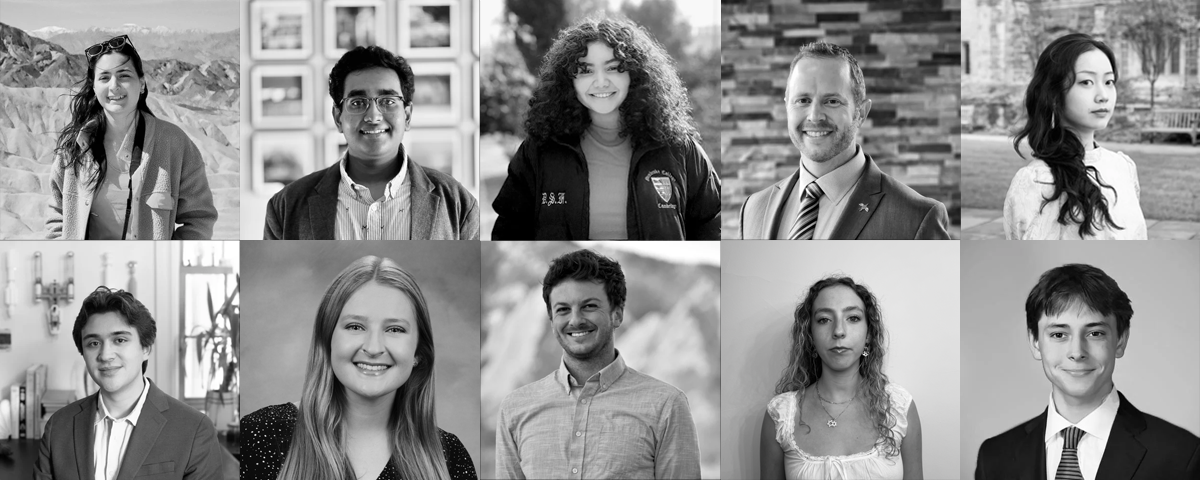
This year Aurelia’s volunteer and internship program had a record ten participants: students and young professionals who were matched with a mentor on our senior team and worked on a core project across design, engineering, and policy.
“The Future of Space Exploration”
Ariel Ekblaw worked with The Great Courses to teach a marquee, award-winning course exploring the cutting edge of space exploration, from ambitious missions to the Moon and Mars to the next generation of space stations.
Humans in Space
Aurelia was honored to once again participate in Boryung's Humans in Space (HIS) Challenge this year as part of HIS's Advisory Board and group of expert judges. The HIS Challenge invites visionary startups and researchers to participate in a pitch competition to highlight their groundbreaking solutions for health hazards in space exploration, orbital experiments targeting critical diseases, and next-generation space healthcare leveraging artificial intelligence.
Boston Museum of Science
The Boston Museum of Science added Aurelia's TESSERAE Gen-3 tiles to its ongoing “Space For Everyone” exhibit this year! The tiles — the same ones that self-assembled on the International Space Station as part of 2022’s historic Ax-1 mission — are on display for visitors to explore. Aurelia Institute was also featured in the IMAX film “Space: The New Frontier,” which ran all year at the Museum's Mugar Omni Theater.
In the Media
Bloomberg | On The Close with Romaine Bostick and Katie Greifeld, Ariel Ekblaw discusses how Aurelia and Rendezvous Robotics are leading the paradigm shift to self-assembling space infrastructure for the emerging space domain.
Financial Times | An orbital industrial revolution is underway, says Ariel Ekblaw in an op-ed.
WBUR’s On Point | Ariel Ekblaw talks with Meghna Chakrabarti and Christian Davenport about public-private partnerships and the emerging space economy.
Wall Street Journal | Attractive windows, improved sleeping quarters and other amenities will make housing in orbit feel more like a cabin than a tin can.
The Naked Scientists Podcast | Interview with Annika Rollock on TESSERAE and the engineering challenges of building space habitats.
Shaping Science Podcast | Ariel Ekblaw joins New York Academy of Sciences President Nicholas Dirks to discuss the complexity and promise of modern space exploration.
MIT News | A profile of Aurelia’s spinout story from MIT, on how we support mission-driven space innovation, for Earth and beyond.
Ex Terra Podcast | Self-assembling space architecture: The TESSERAE Project, with Aurelia’s Senior Mechanical Engineer Evan Hilgemann.
Fox Business | Time to scale up what we can achieve in space, Aurelia Institute CEO says on Mornings with Maria.
Newsweek | Self-assembling space stations? Dr. Ariel Ekblaw explains the future of exploration on Expanding Space.
Growing our orbit
At Semafor’s World Economy Summit in April, Ariel Ekblaw joined the “AI and the Next Tech Revolution” session to discuss the thriving commercial space economy and what’s on the horizon for research, funding, and innovation in space.
Ariel was also a speaker at the Fast Company Innovation Festival in September, joining SpaceMD’s Kenneth Savin for the panel “Why the Next Big Breakthrough Could Come from Space.”
During Massachusetts Space Week 2025, Ariel led a Space Biotech Summit at MIT on April 24, pulling in the best of the Boston biotech scene and microgravity research platforms, with Aurelia Foundry and E2MC (Earth-to-Mars Capital). At MIT AeroAstro’s SpaceTech, VP for Strategy and Business Development Stephanie Sjoblom joined the panel “STEM Space and Science Communication” to talk about Aurelia’s efforts in outreach and education. And at Boston’s Museum of Science, Annika Rollock participated in a “Meet a Scientist” event, giving families an introduction to space architecture.
The Aurelia team is engaging with new key partners and initiatives this year:
Keynote at the Japanese Chamber of Commerce & Industry Annual Gala
Guest speaker at the Chan Zuckerberg Initiative SF Biohub
Featured organization at the Foresight Institute Seminar Series and Vision Weekend
Looking forward
Beyond the Cradle
Save the date! Aurelia Institute and the MIT Space Exploration Initiative will co-host the 10th annual Beyond the Cradle event on April 8, 2026 at the MIT Media Lab as part of MIT Space Week. Mark your calendars for an amazing lineup of speakers!
250 Years of Innovation
Next year is the 250th anniversary of the signing of the Declaration of Independence, also known as the US Semiquincentennial. Keep an eye out for how Aurelia Institute is celebrating the last 250 years of American innovation while looking into the future to see what the next 250 years will hold. Science and innovation are building blocks of our nation’s spirit, and we look forward to celebrating 250 years of STEM inventions.