

The TESSERAE Space Habitat Pavilion comes home to MIT
The Pavilion is newly installed in the MIT Media Lab, which hosted this year’s Beyond the Cradle event.
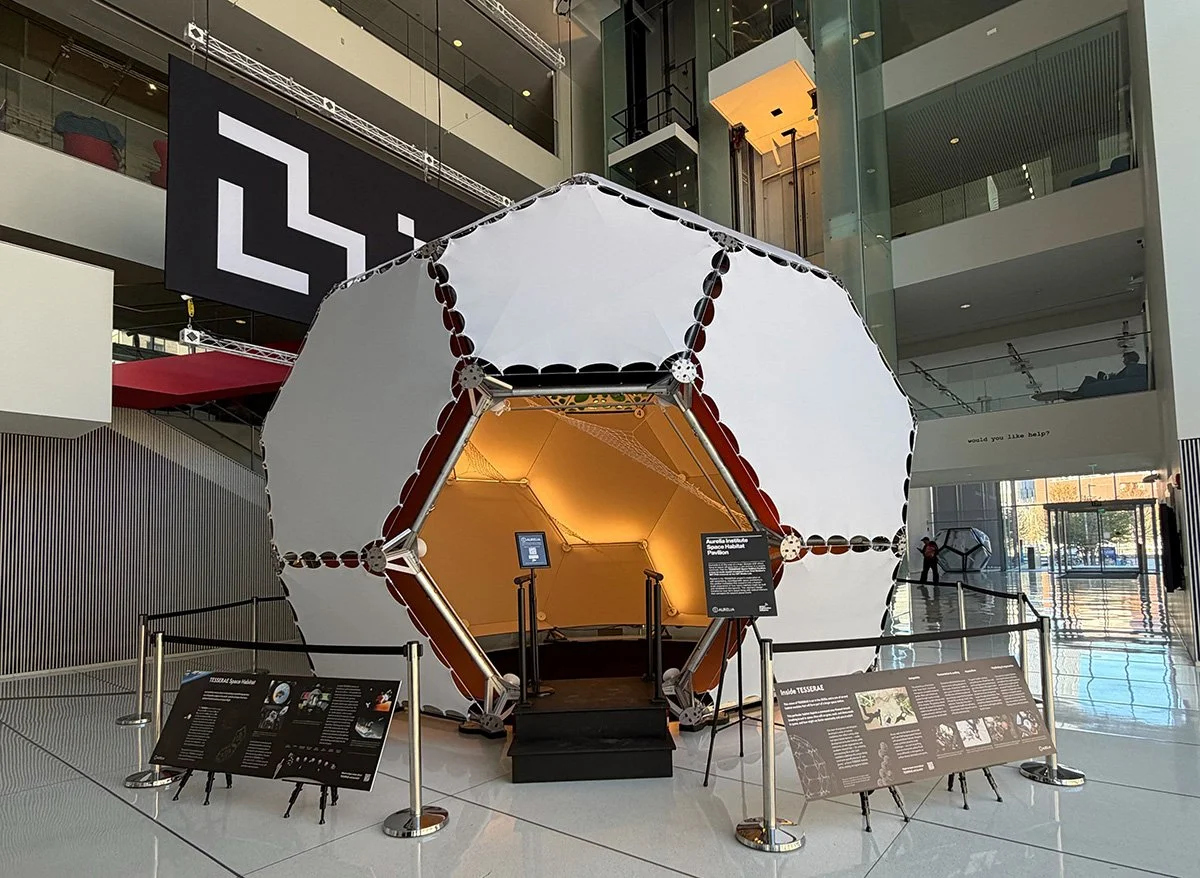
If you were able to join us in person at Beyond the Cradle this April, hopefully you got a chance to visit the TESSERAE Space Habitat Pavilion, newly installed in the MIT Media Lab lobby.
The exhibition at the Media Lab is a significant moment for the Pavilion, and for Aurelia. The 24x24-foot structure is a full-scale, interactive model of a space habitat, of the kind Ariel Ekblaw envisioned when she began her PhD work on self-assembling space structures at the Media Lab a decade ago.
Ten years later, TESSERAE is a maturing technology, proven twice in orbit and headed back to the ISS later this year for the first test of the full, 32-tile buckyball. Our spinoff Rendezvous Robotics is working simultaneously toward a large-scale orbital test. Ten years from now, we are on track to see a fully realized TESSERAE structure in low Earth orbit.
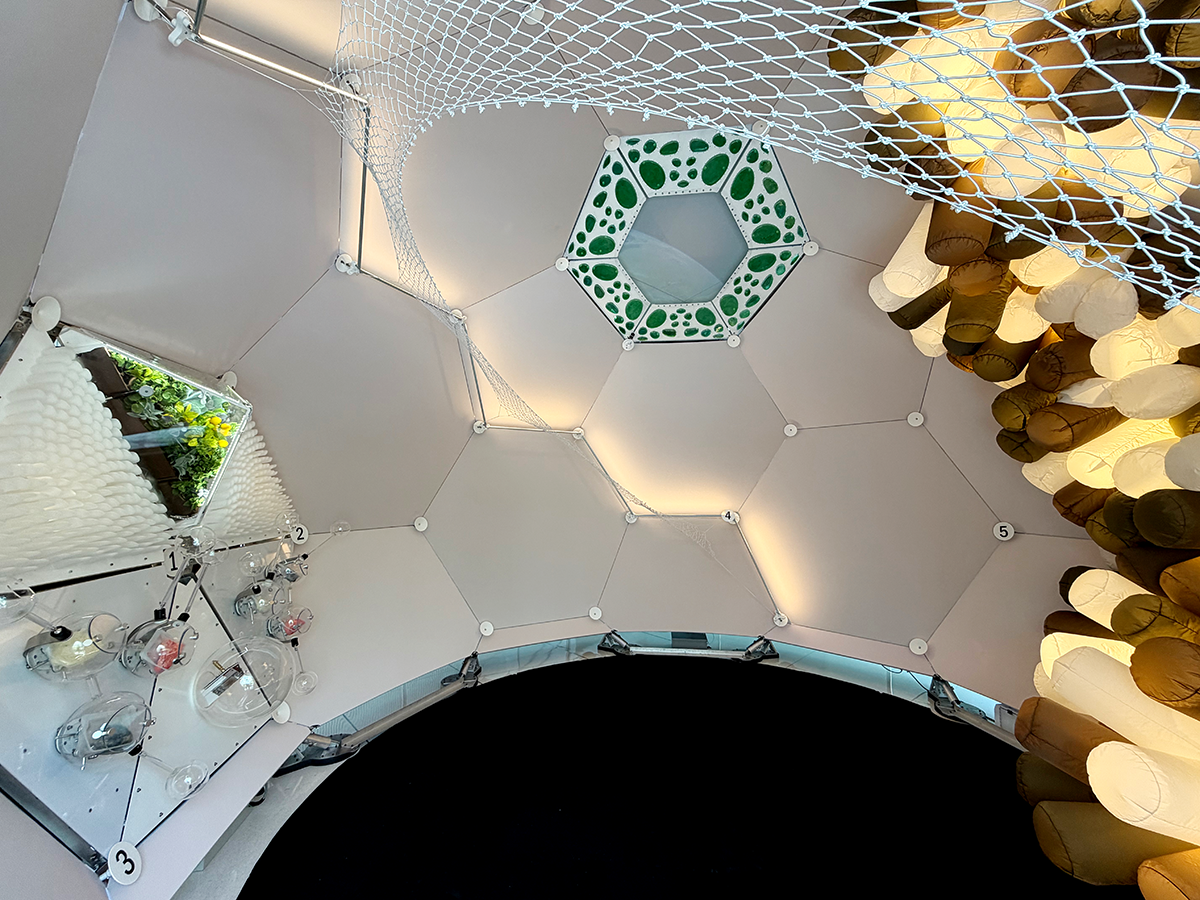
The TESSERAE Pavilion has previously been exhibited at The Substation in Roslindale, at Seattle’s Museum of Flight, and at the TED Conference in Vancouver.
The Space Habitat Pavilion is TESSERAE’s Earthbound companion. In a near future where hundreds or even thousands are commuting to LEO to work in the flourishing space economy, people will need places to live, to gather and relax. The Pavilion offers an immersive view into that future, inviting visitors to imagine themselves living comfortably in a weightless environment.
The Media Lab is a perfect place to host the TESSERAE Pavilion, not only because it’s back where it all began, but because the Media Lab shares a lot of the same values and design principles that went into creating the Pavilion: interdisciplinary methodologies, user-centered design, humanism in practice.
Interested in a tour of the Pavilion while it’s in Cambridge? Reach out to us at hello@aureliainstitute.org.
Highlights from Beyond the Cradle
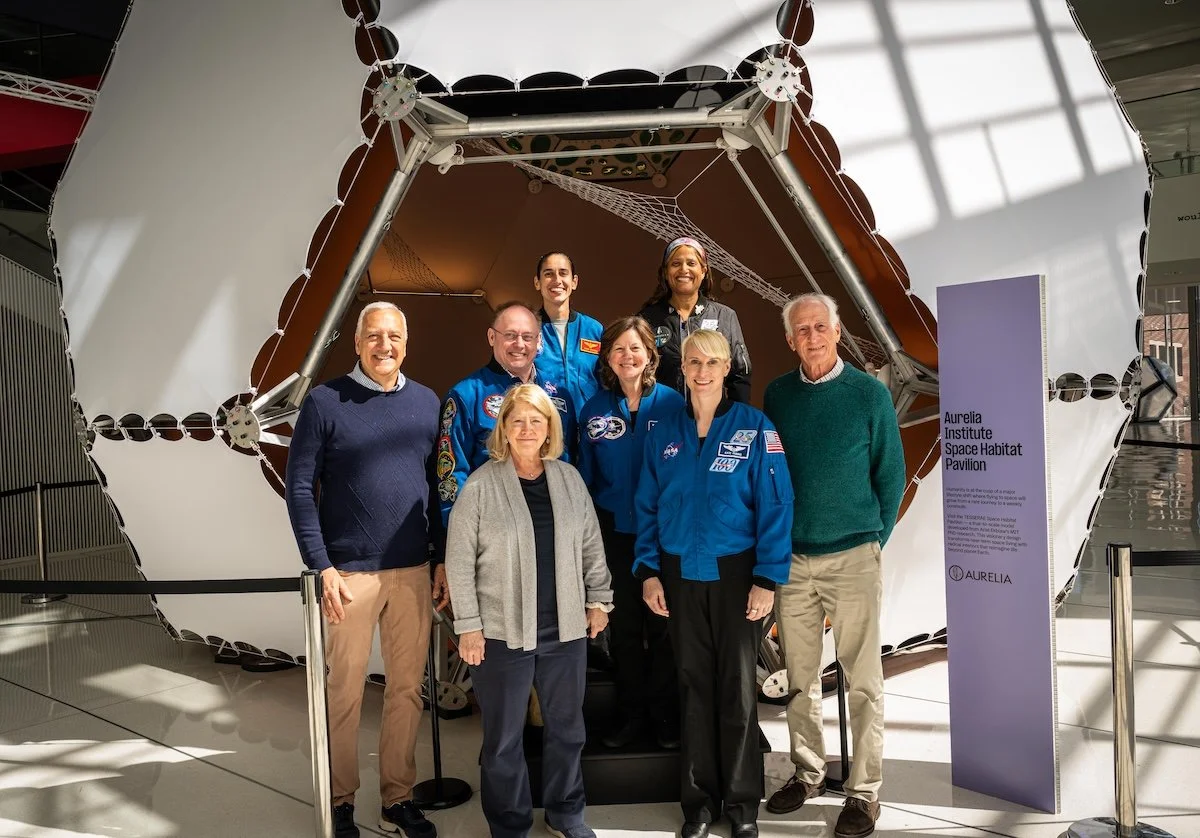
Astronauts Pam Melroy, Kate Rubins, Mike Massimino, Mike Fincke, Cady Coleman, Jeff Hoffman, Jasmin Moghbeli, and Sian Proctor stand in the Pavilion at Beyond the Cradle. Credit: Steve Keep
In addition to the exceptional lineup of speakers, this year’s Beyond the Cradle had the good fortune of taking place in the middle of NASA’s Artemis II mission, lending the day a thrilling energy. It’s an exciting time to be excited about space.
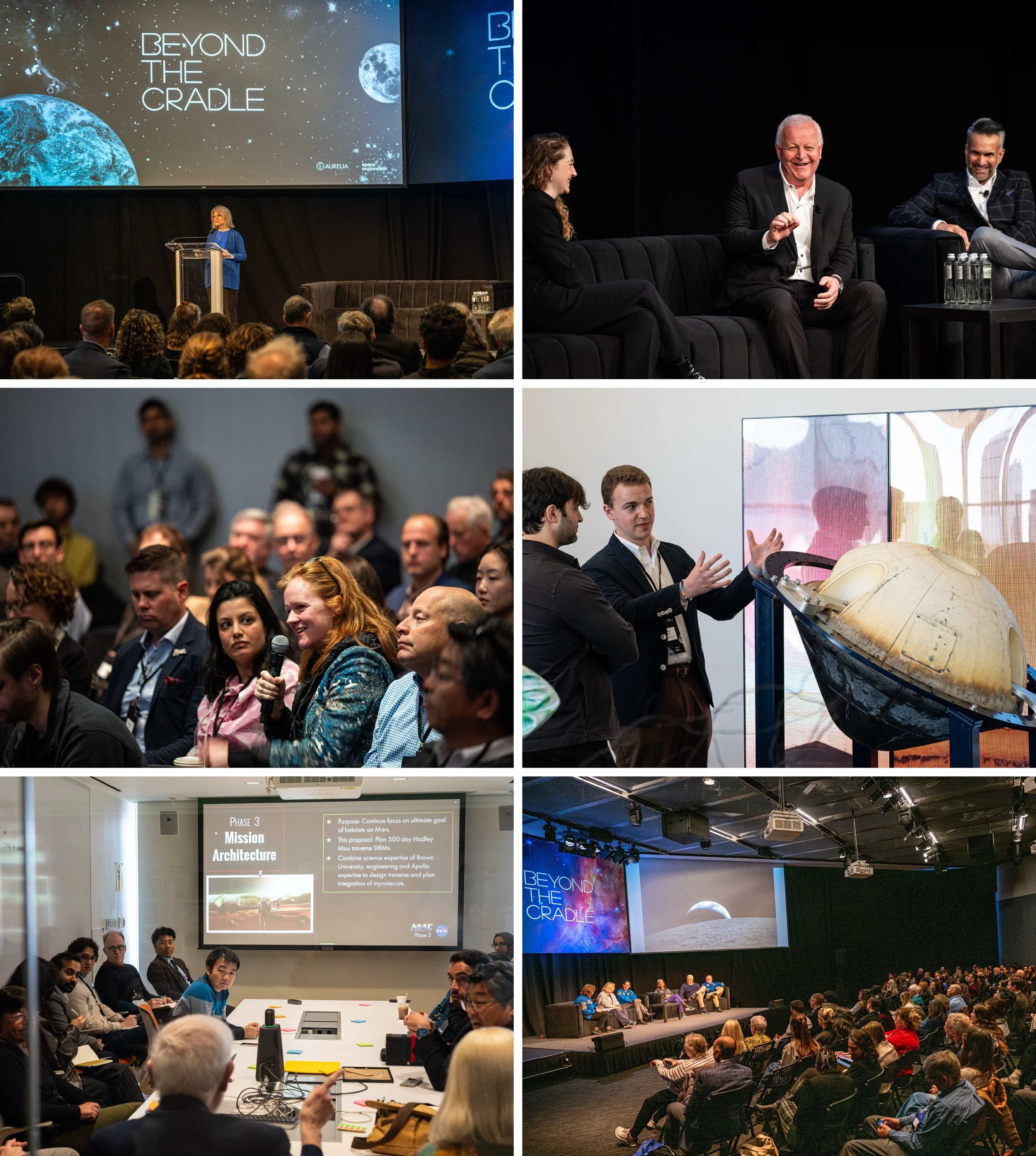
Credit: Steve Keep
From MIT President Sally Kornbluth’s call to “do big things together,” to pursue ambitions in orbital biotechnology that are as bold and inspiring as the Apollo and Artemis missions; to keynote speaker Prof. Julien de Wit’s work transforming the tools of discovery into operational infrastructure for planetary protection; to the startups leading the next generation of space habitats and the artists, authors, and visionaries giving us new ways to think about humanity’s role in our solar system — Beyond the Cradle was a celebration of our greatest aspirations in space.
Recent Media & Appearances Roundup
WSJ Future of Everything 2026 | Ariel Ekblaw explores how self-assembling structures could make orbiting research habitats a reality, unlocking scientific and medical breakthroughs that only the weightless environment of space can deliver.
The Most Interesting Thing in AI Podcast | Ariel chats with The Atlantic’s Nicholas Thompson about ringworlds, the technical challenges and environmental opportunities of building data centers in space, Magna-tiles with fold-out furniture, and more.
Semafor World Economy | Ariel predicts an upcoming “Cambrian explosion” of funding for new space-oriented startups to follow the SpaceX IPO this year.
Foresight Institute | Ariel presented on self-assembling space structures at Vision Weekend USA
Tech Stuff Podcast | Ariel sits down with Oz to discuss self-assembling space architecture, how science-fiction influences her inventions, and why she doesn’t think billionaires investing in space is a bad thing.
Space Symposium 2026 | VP of Engineering Bill O’Hara joined the Bio-Labs Beyond Earth and the Future of Human Health panel.