

Announcing the winner and honorable mentions of the inaugural Aurelia Prize in Design for Space Urbanism
Aurelia Institute awards Tycho the $20,000 global design competition’s top prize for designer Will Root’s scalable architecture for permanent human civilization in orbit
Credit: Steve Keep
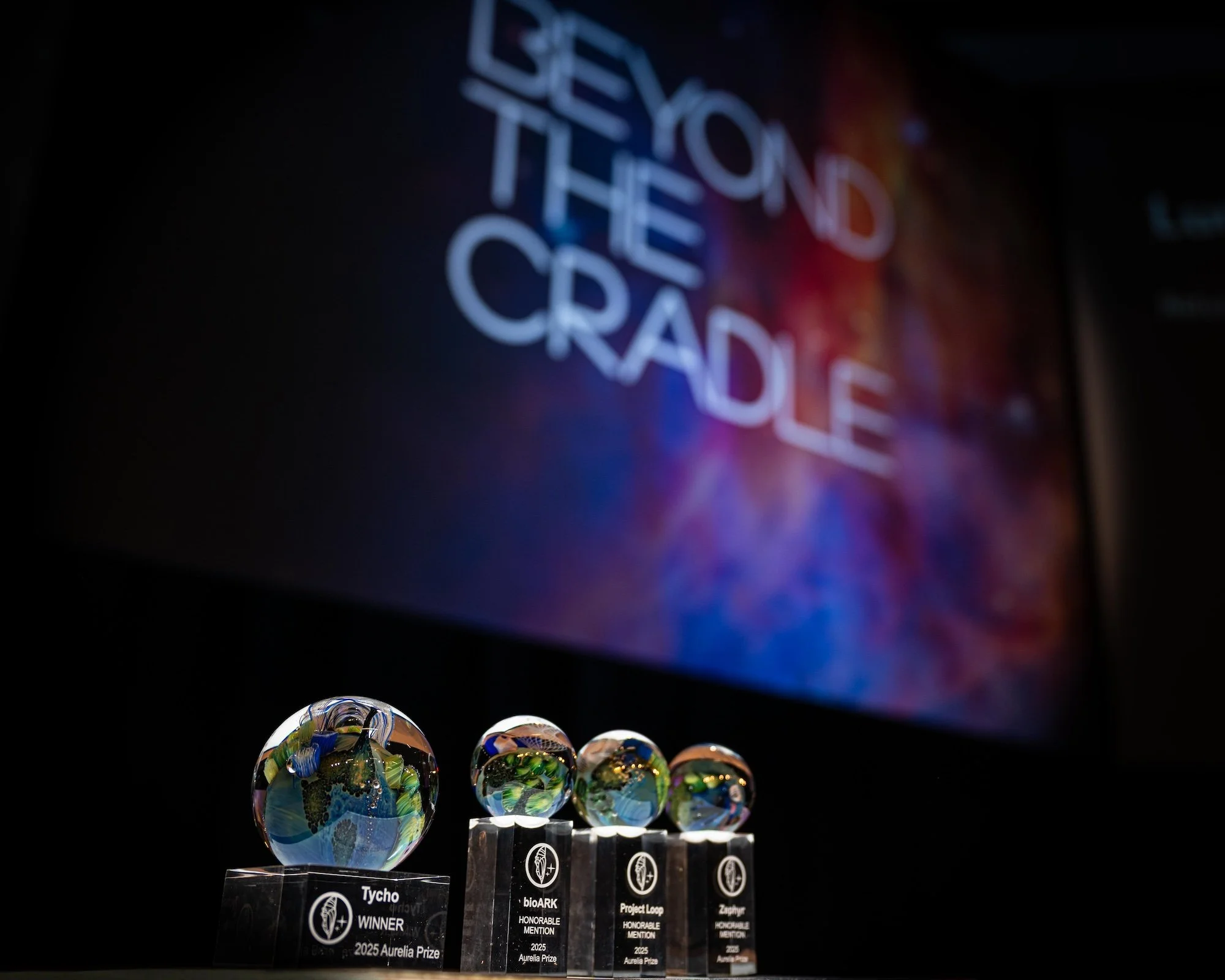
Aurelia Institute has selected the winner and honorable mentions for the inaugural Aurelia Prize in Design for Space Urbanism, announced live onstage on April 8 at Beyond the Cradle, the annual space conference co-hosted by Aurelia Institute, MIT’s Space Exploration Initiative, and the MIT Media Lab.
The judging panel has awarded first prize to Tycho: The Architecture for Permanent Space Civilization from designer Will Root. Tycho proposes a rigid origami space station design, enabling vastly larger habitable volumes capable of supporting thousands of people in low-Earth orbit in the near future.
About Tycho
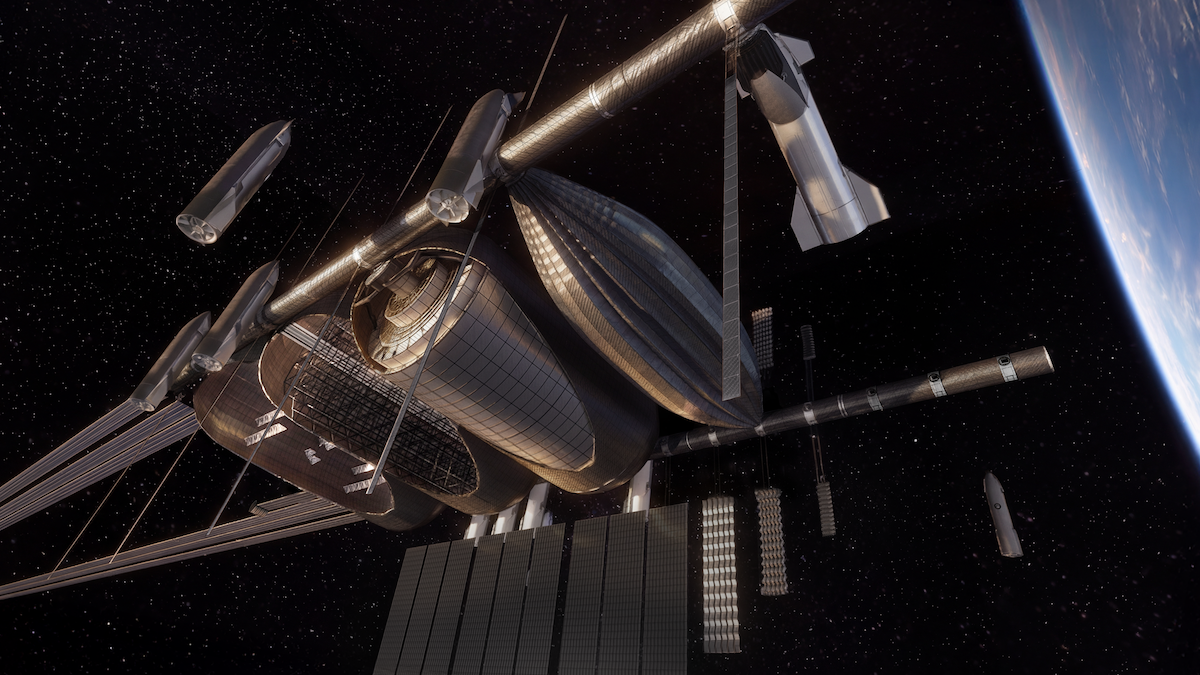
Tycho envisions a realistic, scalable architecture for permanent human civilization in orbit—one designed to grow incrementally, operate continuously, and support life and industry at civic scale. Tycho leverages the unique conditions of the space environment to permit its scale. Operating in a Terminator Orbit, it achieves near-continuous solar generation while eliminating the need for solar or radiator articulation. In LEO, its five-kilometer cable-stayed flexible solar array is passively tensioned by gravity-gradient forces with oscillation damping—reducing reliance on active attitude control while maintaining the station’s primary orientation and planetary alignment.
Credit: Will Root / Tycho
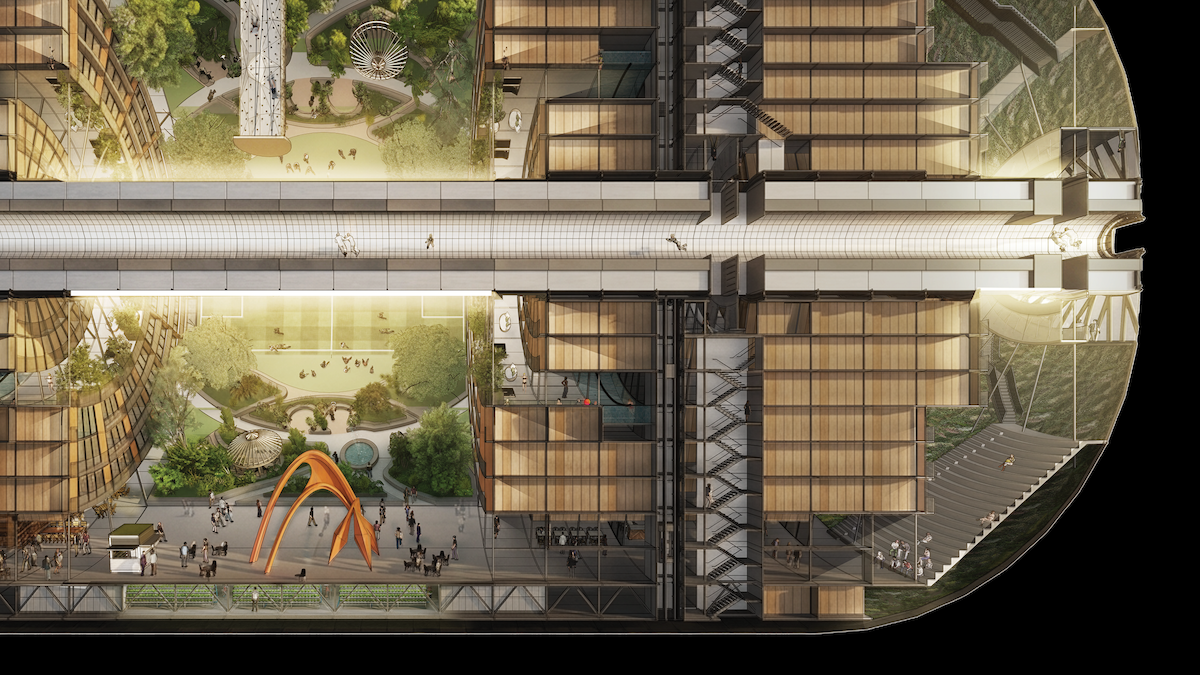
The station’s scale is unlocked by Tycho’s patent-pending “RootShell,” a rigid origami pressure-vessel technology. These expandable geometries allow a single Starship launch to deploy modules exceeding 250,000 cubic meters, without the compromises of soft inflatables or the need for extensive orbital assembly.
“Tycho is exactly the kind of well-considered, aspirational, and yet still near-term credible concept we were hoping to find and support with the Aurelia Prize,” says Ekblaw. “Humanity is at an inflection point, as we become a truly space-faring species in this century. There are a lot of incredibly talented people out there putting serious work into designing humanity’s future in space, and it’s been thrilling to see some of their best work through this prize cycle. I think Gerry O’Neill would be proud.”
Credit: Will Root / Tycho
In addition to winning the $20,000 USD prize purse, Will Root will also be invited to join an upcoming parabolic research flight as part of Aurelia Institute’s Horizon Zero Gravity Program, and to submit Tycho to Aurelia’s Space Architecture Trade Study: a public resource to gather innovative approaches to space habitat design for academics, industry professionals, and the broader space architecture community.
Root is a designer focused on large-scale modular systems on Earth and in space. He is the founder of Tycho Space, developing a new class of orbital habitats, and a co-founder of Different Systems, advising commercial ventures and research organizations on space stations and deployable infrastructure.
“The Aurelia Prize comes at a pivotal moment: large-scale human access to orbit is nearly within reach, but the station architecture to support it does not yet exist,” says Root. “Tycho is developing a new class of dramatically larger deployable pressure vessels to enable that future, and we’re honored to have that vision recognized by Aurelia.”
Honorable Mentions
Announced in December 2025, the Aurelia Prize in Design for Space Urbanism asked architects, engineers, designers, and enthusiasts around the world to submit concepts for near-future space stations, lunar habitats, and autonomous industrial facilities. The envisioned structures could be designed for low-Earth orbit, the lunar surface or lunar orbit, or a Lagrange point, and were required to be centered on habitat and industrial designs that consider utility, benefit to Earth, and efficiency in the space environment.
Four submissions were awarded Honorable Mention; each of these teams will receive $1,000 USD, as well as an invitation to join the upcoming Horizon flight and to contribute their concepts to the Space Architecture Trade Study.
Credit: Christopher Maurer, Lynn Rothschild, Jim Head / bioARK
bioARK: biogenic architecture to evolve beyond the cradle
Christopher Maurer, Architect, redhouse studio
Lynn Rothschild, Astrobiologist, NASA Ames Research Center
James Head III, Planetary Scientist, Brown University
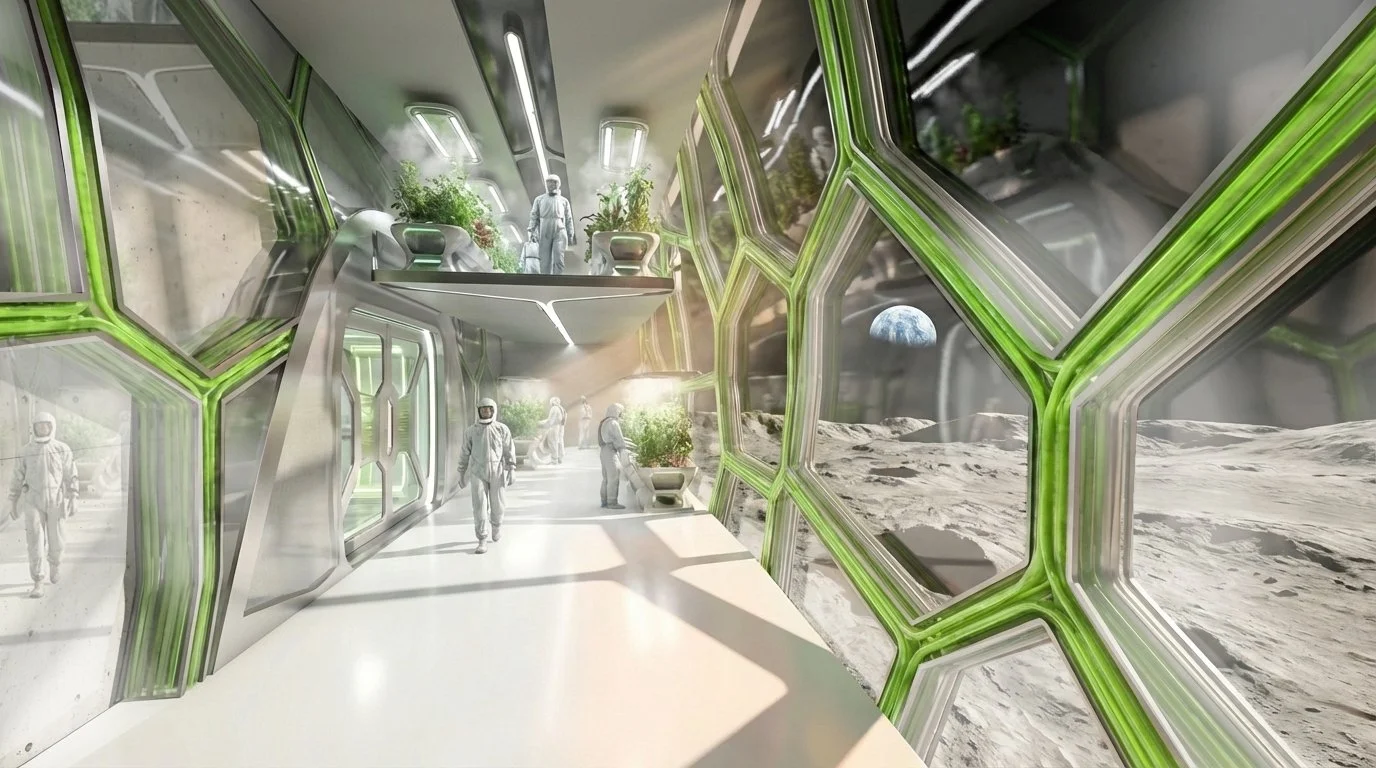
bioARK builds on research from NASA’s NIAC program to grow architecture off-planet. Moving beyond the cradle will require an all-of-life effort: humans cannot leave Earth without life-sustaining microbial biomes. As we extend the only life we know into the universe, we propose working together - leveraging fungi for radiation attenuation, bacteria for atmospheric transformation, and animalia for construction, exploration, and stewardship beyond Earth.
Credit: Silvio De Mio / Project Loop
Project Loop
Silvio De Mio
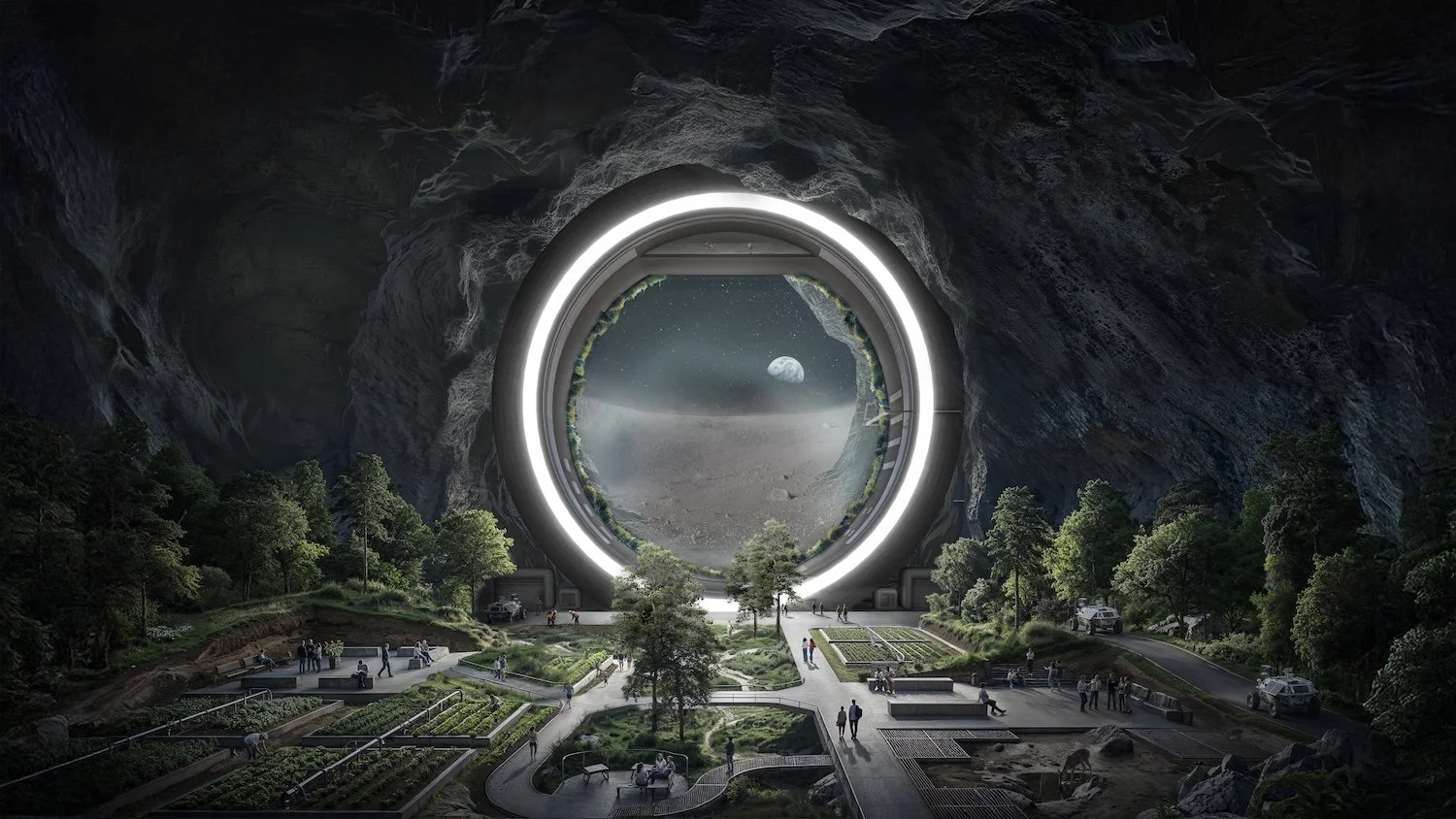
Project Loop proposes a pioneering model for lunar settlement, transforming a lava tube into an expansive, pressurized habitat that protects against the harsh surface environment while supporting long-term human life.
Credit: Hugo Shelley, JP Hastings-Edrei / Zephyr
Zephyr
Hugo Shelley and JP Hastings-Edrei
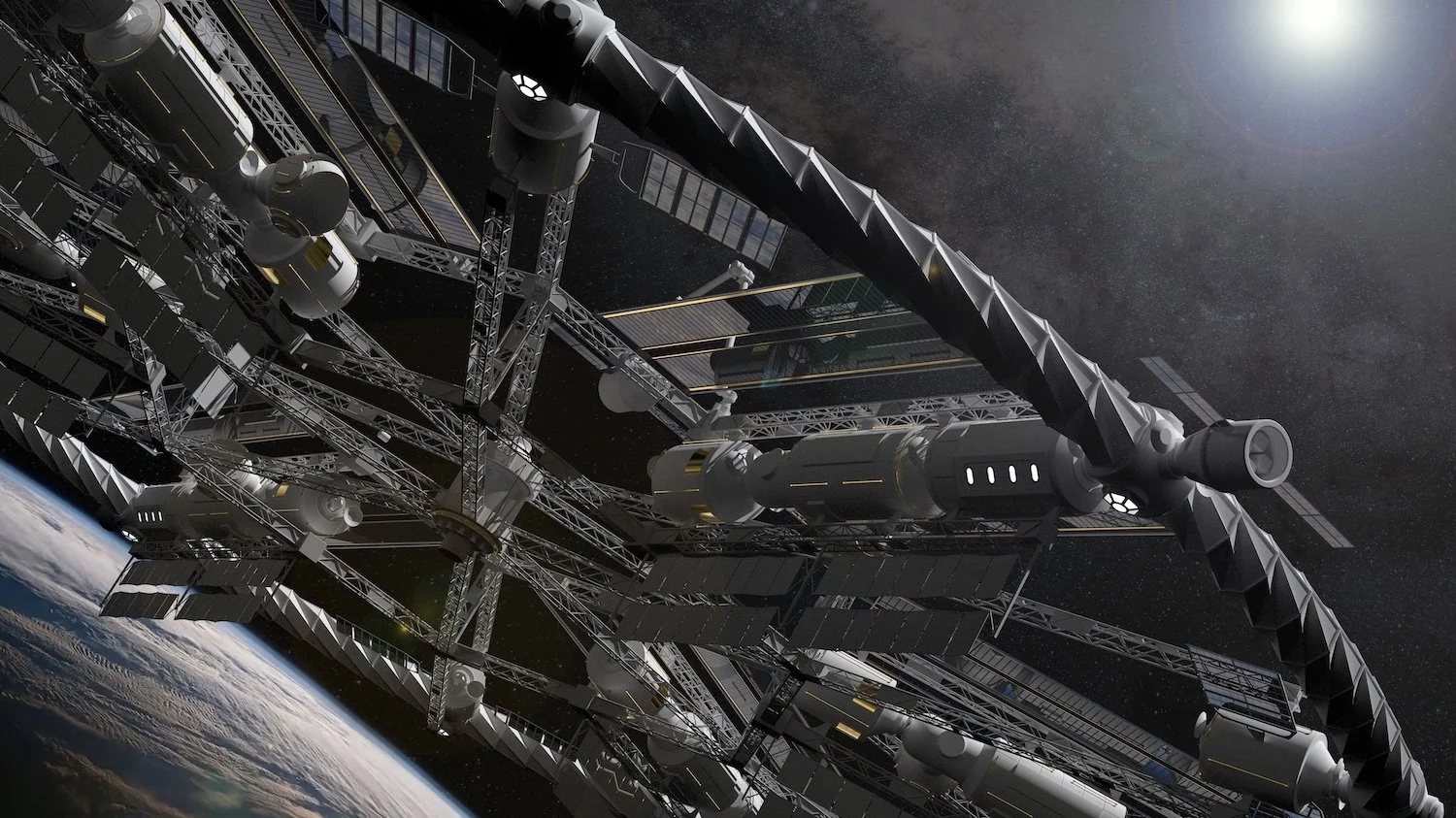
Zephyr is an orbiting laboratory specializing in bioregenerative life support technologies. The rotating station houses bioreactors and hydroponic farms, enabling crews to investigate how partial gravity affects crop development, cellular growth, gene expression and other critical biological processes.
Credit: Filip Śledź, Maciej Jamrozik / Orbital Emergency Granary
Orbital Emergency Granary
Filip Śledź and Maciej Jamrozik
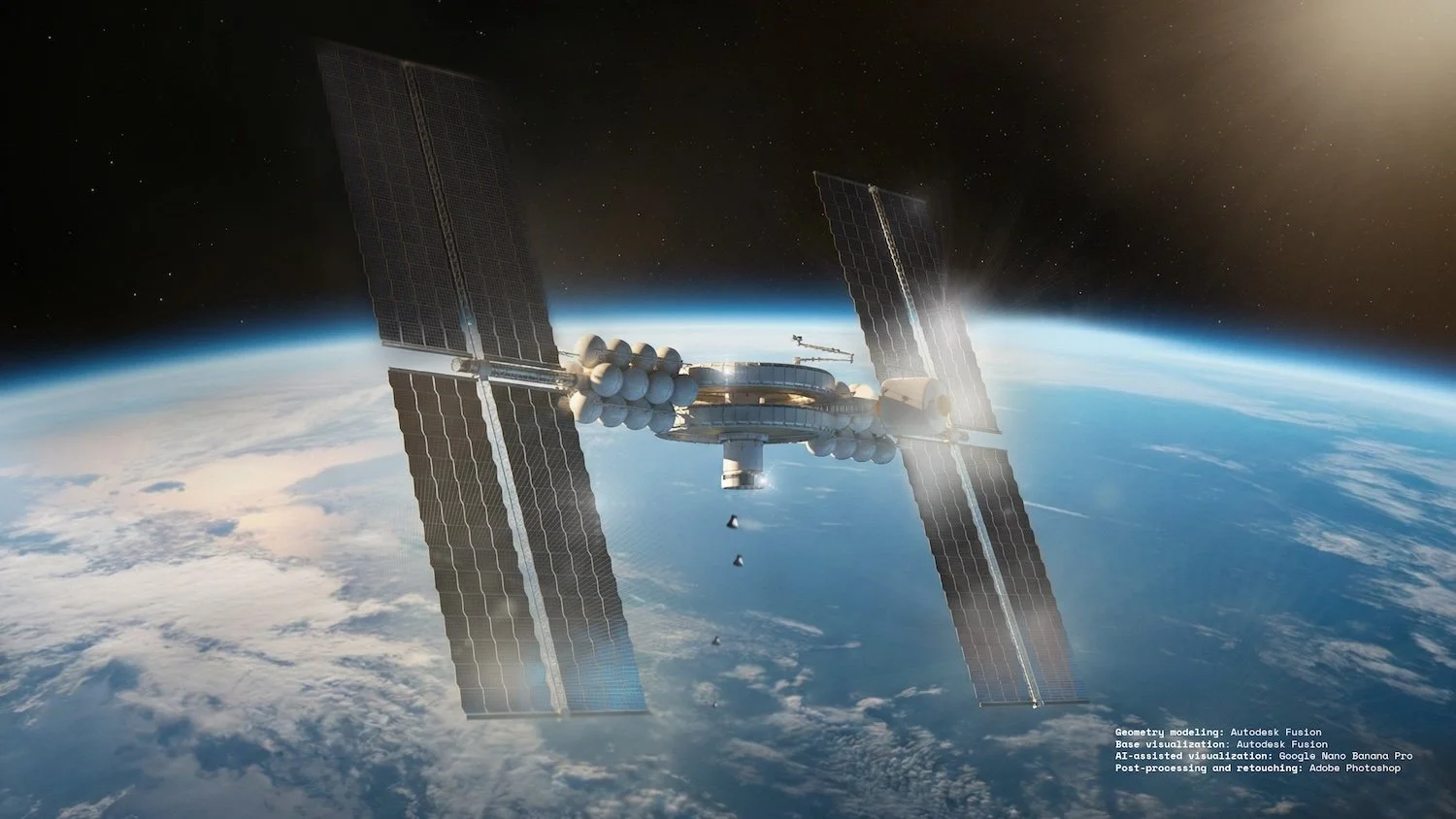
Orbital Emergency Granary is a scalable orbital factory designed as Earth’s strategic food reserve. In an era of increasing climate instability and geopolitical tensions, conventional food aid systems face mounting limitations. OeG addresses this vulnerability by enabling industrial-scale food production in space and rapid delivery to regions affected by humanitarian crises.
Finalists
The judging panel for the inaugural prize comprised a world-class collection of designers, architects, and space experts. In addition to Ekblaw, who earned her PhD in aerospace structures from MIT, the jury included NASA Artemis II astronaut Victor Glover; Bjarke Ingels, Founder of BIG; Andrew Zuckerman, visual artist; Thomas Heatherwick, Founder of Heatherwick studio; and Olga Bannova, Director of the Space Architecture Graduate Program, University of Houston.
The Aurelia Prize drew over 200 submissions from designers around the world and across disciplines. “We’ve been overwhelmed by the level of interest and expertise from across industry and academia,” says Aurelia CEO Ariel Ekblaw. “My fellow judges and I were so impressed with the quality, variety, and sheer creativity of the submissions we received.”
In addition to the winner and honorable mentions, the judges selected a group of finalists whose work embodied the goals and vision of the Prize across all categories. These teams were also invited to submit their concepts to the Space Architecture Trade Study.
Kessler Orbital Station
Joseph M. Mwaisaka
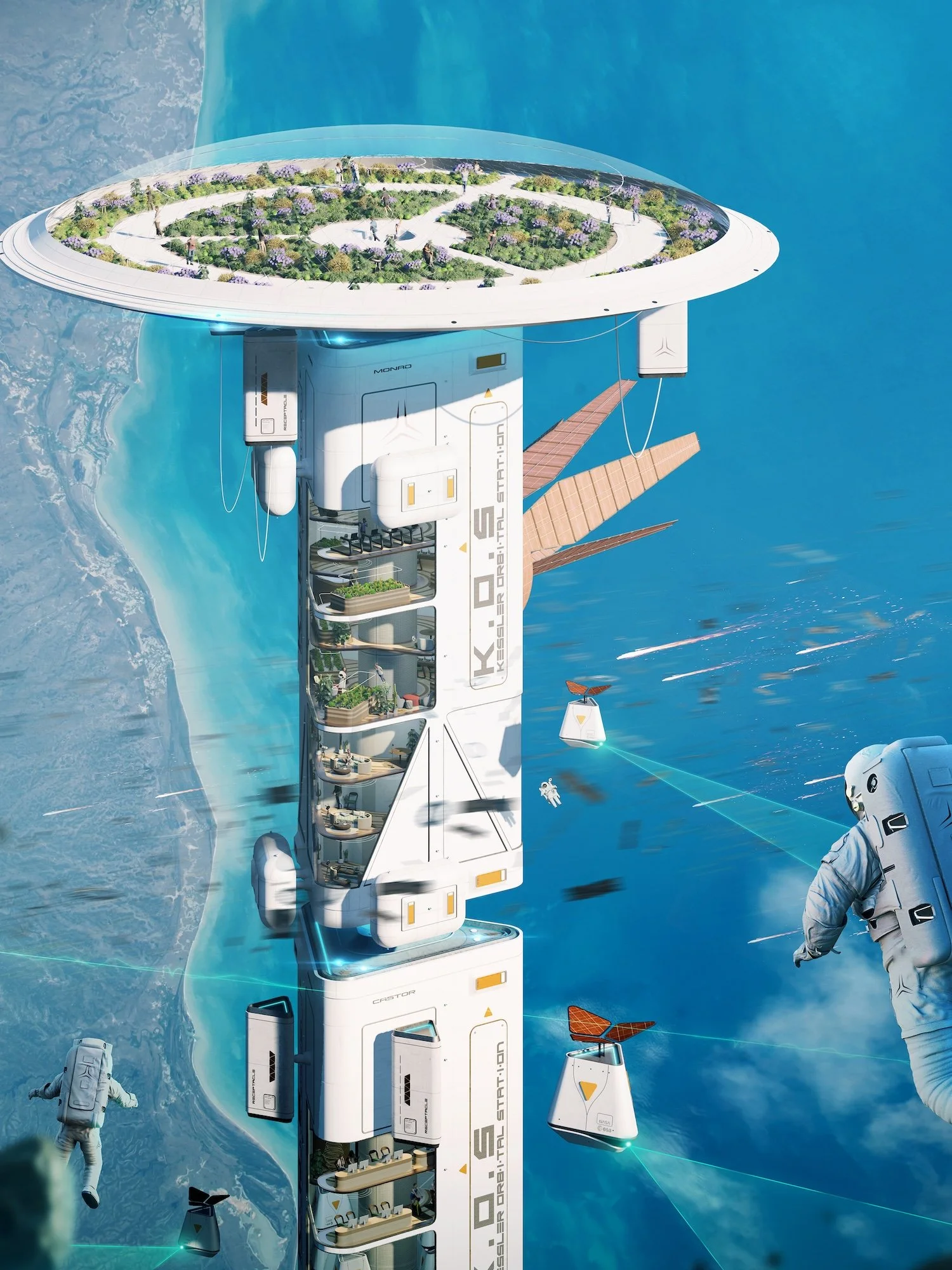
Envisioned as a vertical skyscraper station, the Kessler Orbital Station integrates habitation, research, and orbital maintenance into a single architectural system.
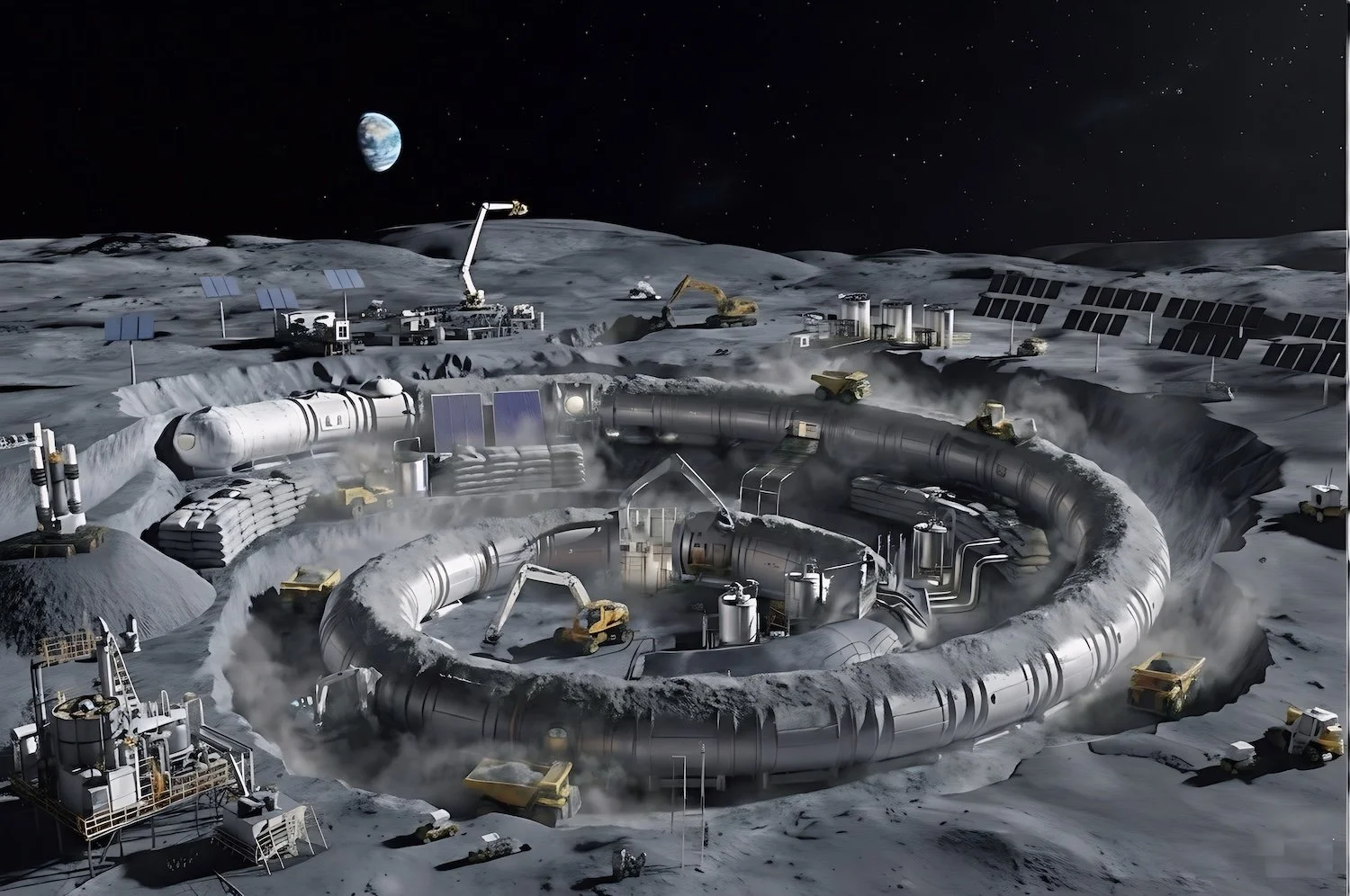
Lunar Nautilus
Gayathri Dhanapal and Jacob Oommen
The Lunar Nautilus is a near-term subsurface settlement concept for the Moon’s South pole that asks whether an engineered Spiral can play the role that lava tubes and caves cannot yet fill in the polar regions.
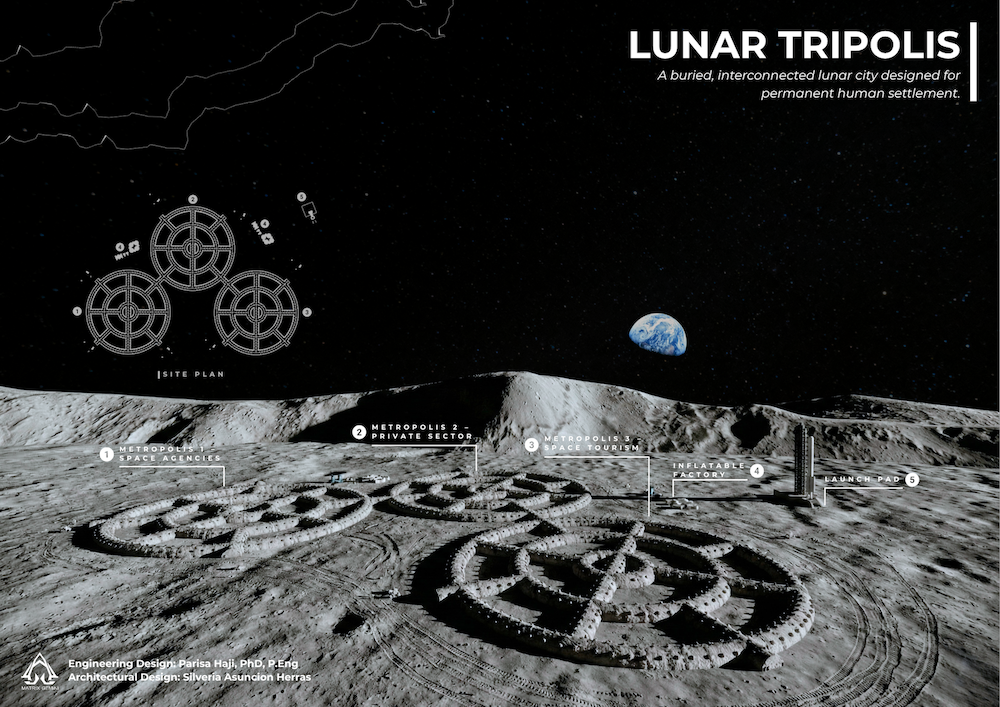
Lunar Tripolis
Dr. Parisa Haji and Silveria Asuncion Herras
Lunar Tripolis is an integrated, permanent lunar city designed for sustained human settlement rather than temporary or inflatable deployment.
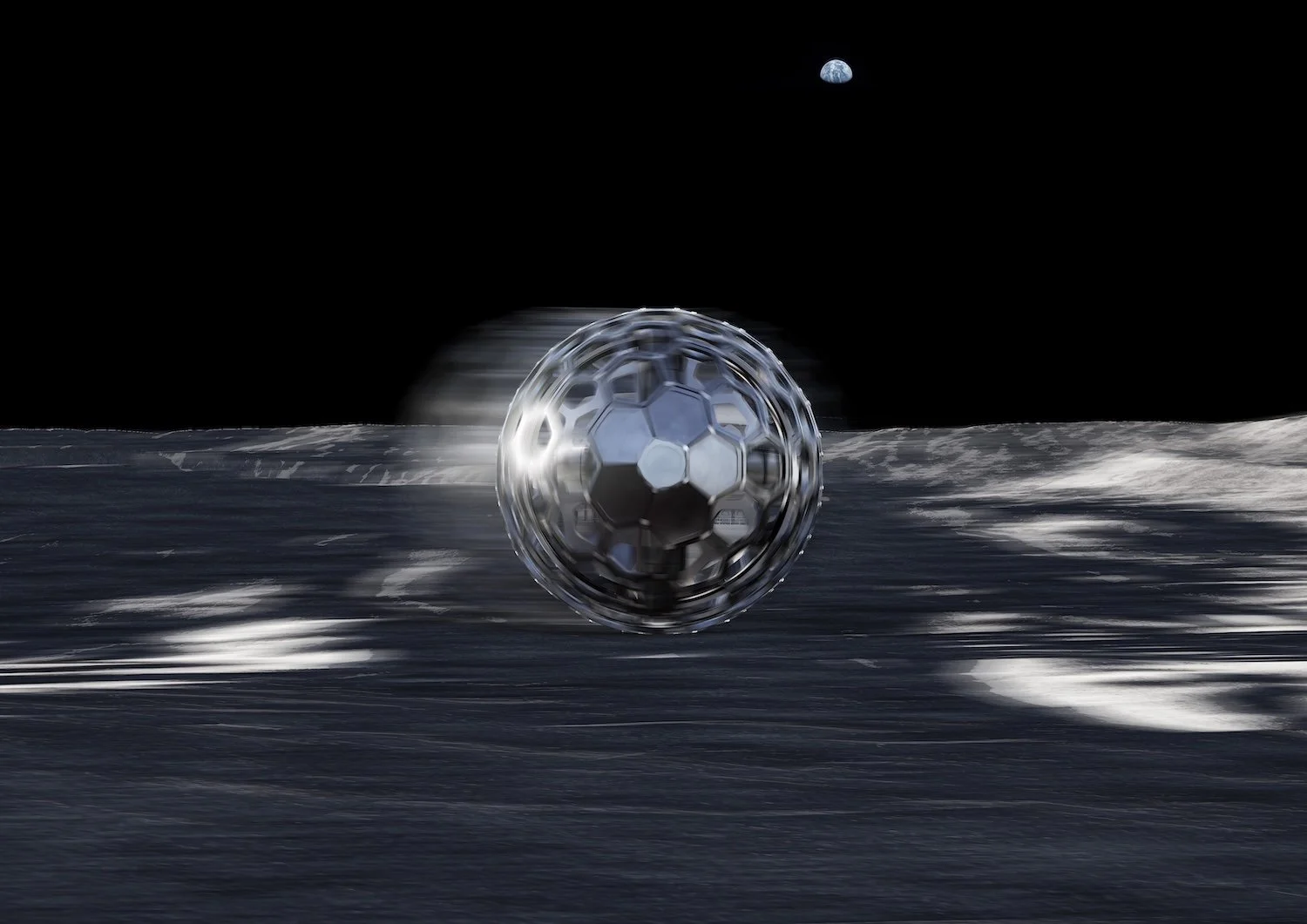
Moon Walker
Xinyuan Kong, Jiayi Li and Ziyue Feng
Moon Walker is a mobile research outpost inspired by tumbleweeds, designed for the Lunar South Pole.
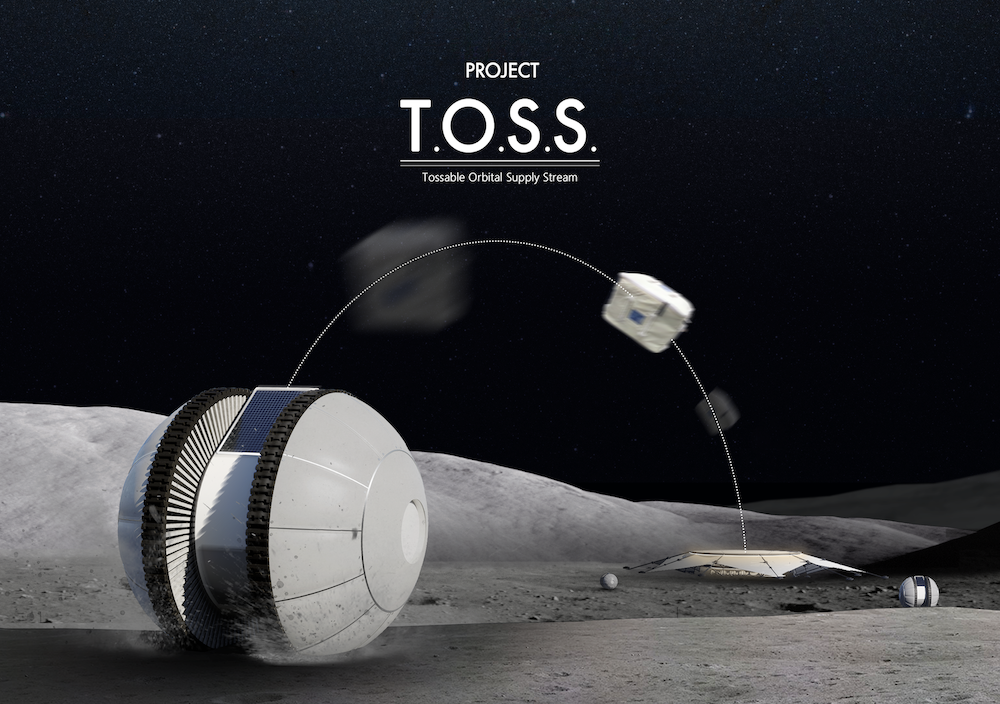
Project T.O.S.S.
Luyao Li, Kexin Zhong and Yuying Wei
TOSS (Tossable Orbital Supply Stream) is an automated logistics solution specifically engineered for the complex terrain of the Lunar South Pole.
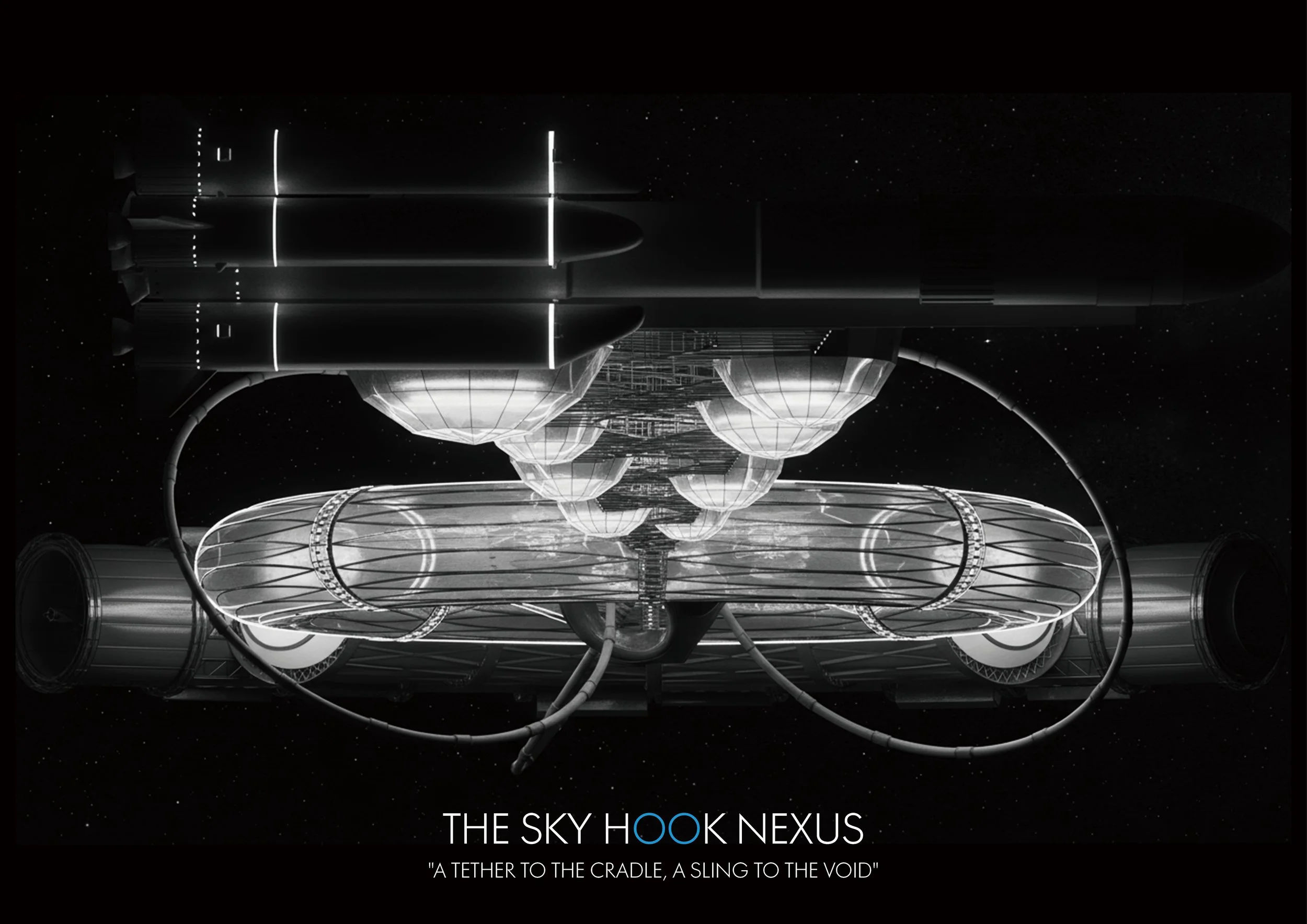
Sky Hook Nexus
Yaokun Liu and Jingjing Shao
Sky Hook Nexus proposes a paradigm shift in orbital infrastructure, evolving the space station from a static habitat into a dynamic kinetic interface.
The Aurelia Prize will return this fall with a new call for submissions! We are grateful for the overwhelming response to this first Prize round and look forward to seeing what the next generation of space architects and designers come up with in many future iterations.